
Chicagoland Neighborhood Guide
West Town, Chicago
A large, diverse Near Northwest Side community area encompassing Ukrainian Village, Wicker Park, East Village, and Noble Square — historic brick architecture, strong transit access, and a real estate market that ranges from entry-level two-flats to high-demand urban condos.
About West Town
West Town is one of Chicago's 77 officially designated community areas, located on the Near Northwest Side roughly bounded by the Chicago River to the south and east, Western Avenue to the west, and Kinzie Street and the rail corridor to the south. It is a large, internally diverse area — not a single neighborhood in the way most Chicagoans use that word, but a community area that contains several distinct neighborhoods, each with its own character, housing stock, and real estate market.
The neighborhoods within West Town include Ukrainian Village, Wicker Park, East Village, and Noble Square, among others. Each has a distinct identity. Ukrainian Village is defined by its historic district, its Ukrainian-American cultural institutions, and its concentration of worker's cottages and brick two-flats. Wicker Park is one of Chicago's highest-demand urban neighborhoods, with a nationally recognized dining and nightlife corridor and a competitive real estate market. East Village sits between the two, with a quieter residential character. Noble Square, along the Chicago River corridor, has seen significant new development alongside its older industrial and residential fabric.
West Town developed primarily in the late 19th and early 20th centuries as a working-class immigrant neighborhood. Polish, Ukrainian, Italian, and Puerto Rican communities all left lasting marks on the area's architecture, institutions, and street life. That layered history is visible today in the neighborhood's building stock — worker's cottages, brick two-flats and three-flats, Victorian greystones, and converted industrial lofts sit alongside newer condominium developments and townhomes.
For real estate purposes, understanding which part of West Town you're buying or selling in matters significantly. Wicker Park commands premium prices and sees consistent competition. Ukrainian Village offers historic character with somewhat more accessible entry points. East Village and Noble Square each have their own pricing dynamics. A buyer or seller working in West Town benefits from an agent who understands the distinctions between these sub-markets, not just the community area as a whole.
Neighborhoods Within West Town
West Town is a community area, not a single neighborhood. Understanding the distinctions between its component neighborhoods is essential for anyone buying, selling, or investing here.
Ukrainian Village
View GuideA historic district on the western edge of West Town, defined by worker's cottages, brick two-flats, Ukrainian-American cultural institutions, and landmark preservation protections. Ukrainian Village offers historic character and a quieter residential scale compared to Wicker Park.
Wicker Park
View GuideWest Town's highest-demand sub-market — a nationally recognized neighborhood with Blue Line access, a dense dining and nightlife corridor on Milwaukee Avenue, and consistent buyer competition. Inventory is tight and prices reflect the neighborhood's urban energy.
East Village
A quieter residential neighborhood between Ukrainian Village and Wicker Park, with a mix of historic two-flats, condos, and single-family homes. East Village offers a more measured entry point into the West Town corridor.
Noble Square
Located along the Chicago River corridor on the southern edge of West Town, Noble Square has seen significant new development alongside its older industrial and residential fabric. Proximity to River North and the Loop makes it attractive to buyers and renters who prioritize downtown access.
West Town Real Estate
West Town's real estate market is best understood neighborhood by neighborhood rather than as a single market. Wicker Park is one of Chicago's most competitive urban markets — inventory is tight, demand is consistent, and prices reflect the neighborhood's walkability, Blue Line access, and national profile. Ukrainian Village offers a more measured entry point into the same general corridor, with historic district protections that preserve architectural character but add renovation considerations. East Village and Noble Square each have their own pricing dynamics, influenced by proximity to the Blue Line, the Chicago River, and the broader development activity along the Near Northwest Side. Across all of these sub-markets, the housing stock is predominantly historic — brick two-flats, three-flats, greystones, worker's cottages, and converted lofts — with a growing supply of newer condominiums and townhomes.
For Buyers
Buying in West Town means understanding which part of the community area you're actually targeting — and what that means for pricing, competition, and what you're getting for your money. A two-flat in Ukrainian Village and a condo in Wicker Park are both 'West Town' on paper, but they're very different purchases. I can help you understand the specific sub-market you're evaluating, what comparable properties have sold for, and what to look for in the building type you're considering.
For Sellers
Sellers in West Town benefit from a buyer pool that actively seeks this part of the city — buyers who want Blue Line access, walkable commercial corridors, and historic architecture. The right pricing and positioning strategy depends on your specific neighborhood, property type, and condition. I can help you understand how buyers are likely to evaluate your building and position it to attract serious interest in a market where well-priced, well-presented properties move.
Investment Property in West Town
West Town's concentration of two-flats, three-flats, and larger multifamily buildings makes it a community area that experienced investors evaluate seriously. The Blue Line corridor, Chicago Avenue, and Milwaukee Avenue all support consistent rental demand from a broad mix of tenants. At the same time, the community area's diversity — from the landmark-protected streets of Ukrainian Village to the high-turnover rental market near the Damen Blue Line station — means that investment analysis needs to be specific to the building and its location, not just the community area label.
What to Consider Before You Buy
Properties within the Ukrainian Village Historic District are subject to landmark preservation requirements governing exterior alterations, window replacements, and facade changes. These requirements apply to investors as well as owner-occupants and need to be understood before closing on any property within the district. Properties outside the historic district — in East Village, Noble Square, or the Wicker Park area — do not carry these specific requirements, though local zoning and building code requirements still apply.
West Town's older building stock — worker's cottages, brick two-flats, three-flats, and greystones — requires informed maintenance planning. Original woodwork, older mechanical systems, masonry construction, and historic windows all have specific upkeep requirements and capital expenditure profiles. A thorough inspection and a realistic assessment of deferred maintenance are essential before any acquisition, regardless of which part of the community area you're buying in.
Rental demand across West Town is supported by Blue Line access, proximity to the Loop, and the neighborhood's walkable commercial corridors. Understanding the specific tenant profile your building is likely to attract — and pricing and marketing accordingly — is an important part of evaluating any multifamily property here. Property taxes, operating expenses, and net operating income need to be modeled carefully for any specific building and location.
Local Property Management Experience
I'm a Chicago real estate broker with direct experience managing multifamily rental properties on Chicago's West and Near Northwest Sides. That hands-on property management background gives me a practical understanding of what it takes to operate a rental building in this part of the city — tenant relations, maintenance realities, and the day-to-day responsibilities that don't show up in a pro forma. If you're evaluating a multifamily property in West Town, I can help you think through it from an operator's perspective.
Investment Property ServicesWhat It's Like to Live in West Town
Transit & Commute Access
West Town is served by the CTA Blue Line at the Damen and Division stations, connecting residents to the Loop, O'Hare, and the Northwest Side. Multiple bus routes run on Chicago Avenue, Western Avenue, Milwaukee Avenue, and Division Street. Walking distance to specific Blue Line stations varies significantly depending on where within the community area a property is located — buyers and renters should verify proximity for any specific address. The community area's location on the Near Northwest Side puts most residents within a reasonable commute of downtown Chicago.
Chicago Avenue, Milwaukee Avenue & Local Amenities
West Town's commercial life is concentrated along several distinct corridors. Chicago Avenue runs through the heart of the community area with a mix of galleries, restaurants, cafes, and independent businesses that reflect the neighborhood's creative and cultural character. Milwaukee Avenue through Wicker Park is one of Chicago's most active dining and nightlife corridors. Division Street adds additional dining and retail options. The community area's proximity to River North and the Loop gives residents access to a broader range of amenities without the density of living in those neighborhoods directly.
Architecture & Housing Stock
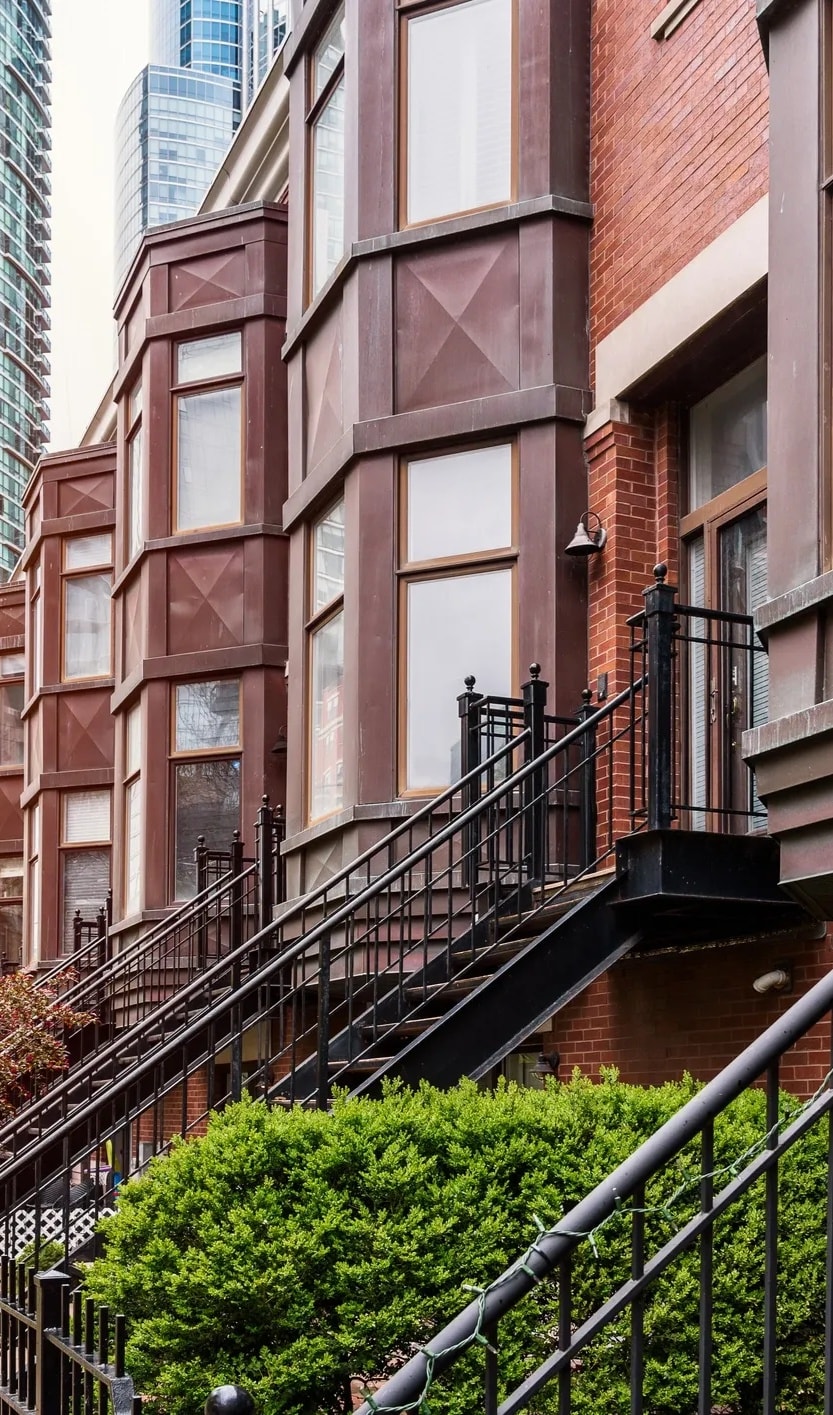
West Town's housing stock is one of its defining features — and one of its most varied. Worker's cottages, brick two-flats, three-flats, and Victorian greystones dominate the residential blocks of Ukrainian Village and East Village. Wicker Park adds a mix of larger single-family homes, historic condos, and newer construction. Noble Square has seen significant new townhome and condominium development alongside its older building stock. For buyers who value historic architecture, West Town offers some of the most intact 19th and early 20th century residential streetscapes on Chicago's Near Northwest Side.
Schools
School assignments in Chicago are address-specific and subject to change. Families evaluating West Town should verify the exact school assignment for any specific address directly with Chicago Public Schools or through the CPS school locator tool. School assignments vary by location within the community area.
Nearby Communities
Humboldt Park
West of West Town along Chicago Avenue — a West Side neighborhood with deep cultural roots, a 207-acre park, and a real estate market that offers genuine opportunity in two-flats, three-flats, and multifamily investment properties.
Logan Square
Northwest of West Town along the Blue Line corridor — a high-demand neighborhood with historic greystones, a nationally recognized restaurant scene, and consistent buyer competition.
River North
Southeast of West Town across the Chicago River — one of Chicago's densest urban neighborhoods, with a high concentration of condominiums, galleries, restaurants, and proximity to the Loop.
Near West Side
South of West Town — home to the United Center, the Illinois Medical District, and a mix of historic and new residential development along the Madison Street and Lake Street corridors.
Working with John Castelli
Interested in West Town Real Estate?
Whether you're buying a historic two-flat, evaluating a multifamily investment, or considering selling — I know Chicago's Near Northwest Side from direct experience as a broker and property manager. Let's talk.